
The Absorption Seminar
How to accelerate and simplify European Fund payments for 2021-2027, safely.
2.5 days of hands-on workshop for Managing Authorities, Intermediate Bodies and programme and project managers. From programming to closure, an equipped method to lift the blockages in absorption.
Why this seminar
Absorption does not fail in one place, it's all interconnected — 3 days to consolidate
A hands-on workshop to rebuild, phase by phase, a chain that pays faster, more simply and without compromise on legal and financial security.
Diagnose
A common leakage-point framework applied to each phase.
Accelerate
Fast-track, continuous payment runs, fixed short cycles.
Secure
Risk-based checks, SCOs, proportionate verifications.
Equip
Automatic alert, expert pool, individualised support.
Target audience
For programme and fund managers
A deliberately hands-on workshop: participants leave with deliverables directly applicable to their 2021-2027 programme.
- Managing Authorities (MAs) — officers and operational leads
- Intermediate Bodies — heads of unit and managers
- Audit and certifying authorities
- Payment, control and verification officers
- Multi-fund programme coordinators (ERDF, ESF+, Cohesion)
- National plans, RRF managers
- Closure, follow-up and evaluation teams
Programme
2.5 days, 10 sessions, 3 workshops
Each session follows the same structure: where absorption drops off, which operational levers to activate, which daily practices to put in place — with and without simplified cost options (SCOs).
Day 1 — Upstream phases: Programming → Calls → Selection → Contracting
- 08:30 – 09:00
Welcome and coffee
- 09:00 – 09:30
Opening: the absorption chain
Framing the absorption challenge for 2021-2027 • Introduction to the leakage-point framework, the red thread across the three days.
- 09:30 – 11:00
Session 1 — Programming phase
Where absorption drops off: indicators too rigid, unrealistic N+2/N+3 forecasts, beneficiary absorption capacity poorly assessed. Levers: rolling quarterly financial forecast, early identification of large projects, programme amendments as a planned tool.
- 11:00 – 11:15
Coffee break
- 11:15 – 12:45
Session 2 — Calls for proposals
Calls too broad or too narrow, weak applicant pipeline, duplication or lack of synergies with RFF and Horizon. Levers: clearer targets and synergies, continuous calls vs. single-round, pre-call technical assistance, standardised templates aligned with future verification needs.
- 12:45 – 13:45
Lunch
- 13:45 – 15:00
Session 3 — Selection phase
Committee backlogs, appeals blocking contracting. Levers: continuous committees, weighted scoring grids favouring implementation capacity, parallel due diligence, notification SLA in days.
- 15:00 – 15:15
Coffee break
- 15:15 – 16:30
Session 4 — Contracting phase
Clauses negotiated case by case, State aid and public procurement checks delayed. Levers: pre-validated contract templates, accelerated State aid and public procurement checks, automatic triggering of the first advance on signature.
- 16:30 – 17:00
Workshop A — Map your own pipeline
Participants place their Programming → Contracting pipeline on the leakage-point framework and identify three delays to work on in Day 2.
Day 2 — Implementation, alert & support architecture, payment speed
- 09:00 – 09:15
Day 1 recap
Review of leakage points identified in Workshop A.
- 09:15 – 10:45
Session 5 — Implementation failures: adapting contracts, supporting beneficiaries
Contracts without built-in flexibility, problems spotted too late, binary posture that discourages self-declaration. Levers: two-tier amendment procedure, written tolerance thresholds in the contract, graduated response scale from support plan to termination.
- 10:45 – 11:00
Coffee break
- 11:00 – 12:30
Session 6 — The alert & support architecture (deep-dive)
① Indicator-driven alert system with traffic-light dashboard. ② Shared expert pool, pre-briefed, self-routing. ③ Fast-track with published deadline (e.g. 10 working days). ④ Individualised support: risk/capacity segmentation, dedicated case manager, coaching and buddying.
- 12:30 – 13:30
Lunch
- 13:30 – 14:15
Workshop B — Your own alert and fast-track criteria
Drafting trigger thresholds and fast-track eligibility rules with a published processing deadline for your programme.
- 14:15 – 14:30
Coffee break
- 14:30 – 15:45
Session 7 — Management verifications
100 % ex-ante checks, duplicate administrative/on-the-spot checks without risk differentiation. Levers: risk-based sampling, calendars synchronised with declaration cycles, delegation to Intermediate Bodies with quality sampling.
- 15:45 – 16:00
Coffee break
- 16:00 – 17:00
Session 8 — Processing and payment speed
Monthly payment runs, sequential signatures, no risk triage. Levers: continuous runs, tiered authorisation, e-Cohesion automation, fixed short cycle (e.g. 10 working days) for SCOs.
- 19:00
Optional networking dinner
- 20:00
Optional surprise tour with locals
Day 3 (half-day) — Closure and follow-up
- 09:00 – 09:15
Day 2 recap
- 09:15 – 10:45
Session 9 — Closure phase (dedicated)
Backlog of final verifications, unresolved irregularities, vague document retention. Levers: closure-readiness reviews from mid-programme, early resolution of financial corrections, standardised final file validated in advance.
- 10:45 – 11:00
Coffee break
- 11:00 – 12:15
Session 10 — Cross-cutting follow-up (Monitoring)
Integrated financial + physical dashboards, alert thresholds triggering corrective dialogue, real-time data-entry discipline, feedback loop between alerts (Session 6) and closure preparation (Session 9).
- 12:15 – 12:45
Workshop C — Self-assessment closure-readiness
Participants score their programme against a closure-preparation checklist and identify what needs fixing now rather than at closure.
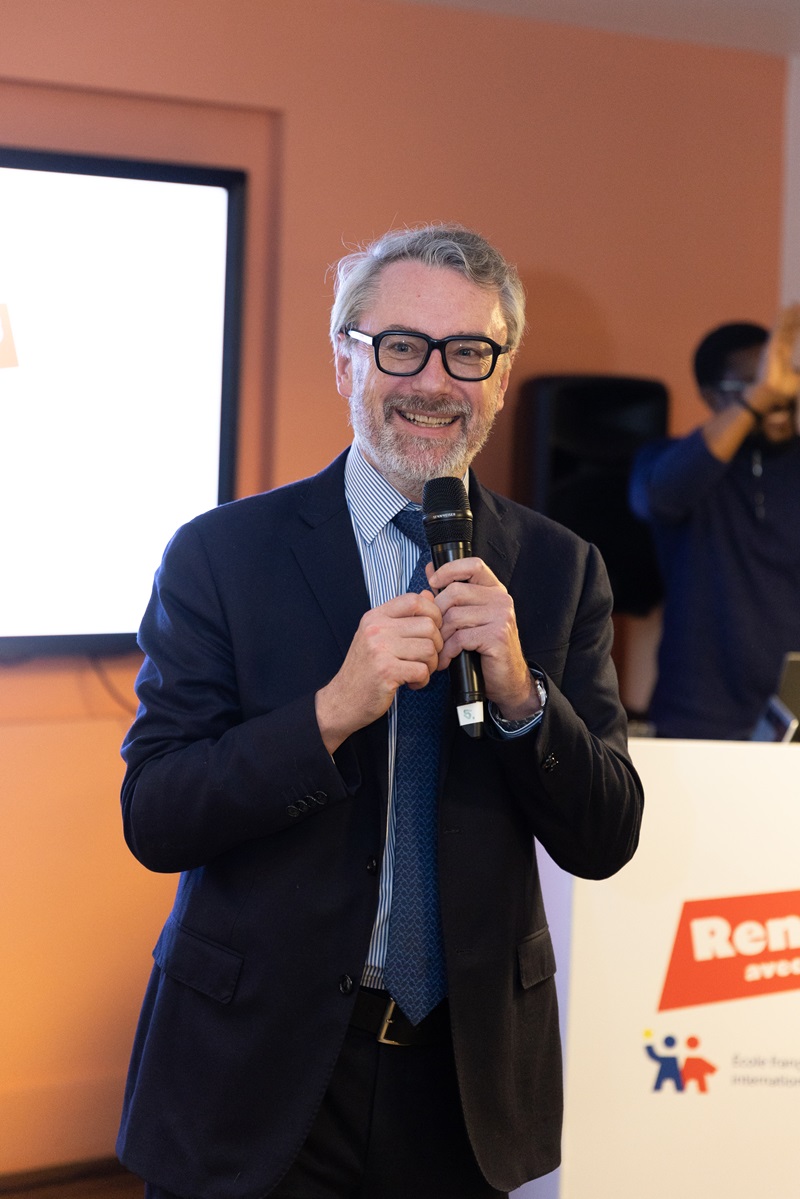
Expert facilitation
Franck Sottou & ETCP team
Over 32 years of experience in the management, monitoring and evaluation of European Funds: KPI systems, risk management, results-oriented management. Co-facilitated with current practitioners from Managing Authorities and Audit Authorities.
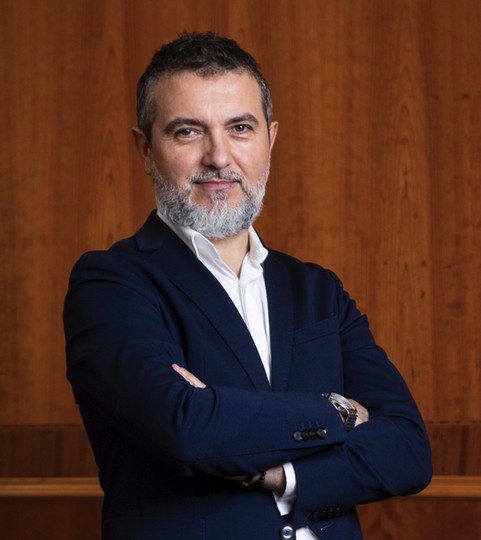
Special guest
Marius Vasiliu
Senior expert in EU funds verification & control — former Secretary of State, Romania
17 years in Romanian public administration: from 2012 to 2019 he headed the Irregularities and Anti-Fraud Unit of the Romanian Regional Operational Programme Managing Authority, overseeing more than 2,500 checks on suspected irregularities and fraud — with no negative finding ever raised by Audit Authority, European Commission or European Court of Auditors audits. He later served as Secretary of State within the Ministry of Investments and European Projects, where he led the technical coordination of the Recovery and Resilience Plan negotiations and built its management and control system, and as advisor to the President of the Audit Authority (Romanian Court of Accounts).
Dates
Wednesday 7 and Thursday 8 October 2026 — full days. Friday 9 October 2026 — morning (closure & follow-up).
Venue
Hotel Littre Paris. Venue and partner hotel shared with registered participants. Optional networking dinner on the Thursday evening.
Format
Small group (max. 25 participants) to preserve workshop dynamics. Working language: English, with possible exchanges in French.
Fees
Invest in a chain that pays
Training fees including materials, workshops, coffee breaks and lunches on the first two days. Accommodation and travel at participants' own expense.
net amount · per participant
Testimonies
What participants say
“Not just conferences — practical advice I could apply the next Monday.”
— Managing Authority, France
“A professional background and hands-on answers to real operational blockages.”
— Intermediate Body, Poland
“Not a touristic seminar — every hour is focused on making the chain pay faster and safer.”
— Programme Coordinator, Spain
Registration
Reserve your place for Paris, 7–9 October 2026
Places limited to 25 participants to preserve workshop quality. Contact the ETCP team for your registration form or a training agreement.